Thursday, 29 September 2011

Waiting Room...

thats what today has felt like...alot of waiting and wasted time. Unfortunalty modules posted up onto the blackboard were not working so we spent time virtually hanging about...that was the this morning, eventually someone came to our rescue and we closed doors on one virtual space to enter another where Stuart was waiting hooray! this afternoon wasn't much better...nobody about to deliver new module. I grit my teeth as I think there is alot to be said for virtual learning enviroments, they are souless places that are confusing, time consuming and dull...its weird to think that whilist real life continues their are pockets of people floating about in these virtual no-mans land waiting room! It can only get better...
                                                                                   
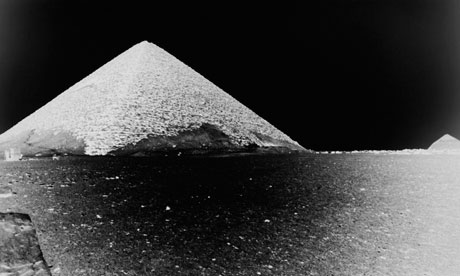
...anyway Ive some research today...read through blogs, looked at TED and came across photographer Vera Lutter..who uses pin hole camera to take what are described a 'ghostly' images. I really like this technique, because of its simplicity as well as the wounderful effects that can be created from just a recipe made up of a box, needle, tape and roll / sheet film
http://www.kodak.com/ek/US/en/Pinhole_Camera.htm
 Extract  from Guardian 29th april 2011: One of the reasons Lutter's images feel tangible and yet weird is that they're realised in negative, so that light forms auras where shadows should be cast and the sky is always black. But it's also the way she makes them, using one of photography's simplest and oldest devices –the pinhole camera. This is time-consuming business, requiring long exposures so that the film not only records the outlines of buildings but the ghost-like forms that move in and out of the frame as the clock ticks on. They can be crafted from anything: Lutter has used an old trunk for some of her work, but she's regularly worked with room-sized boxes to create huge, one-off images.

finally...Ive got some reading to do on intellectual property http://www.ipo.gov.uk/ before next week to test knowledge of IP and find out what aspects of IP are mosr important to me and why?? shall think about that one when Ive done some reading. Next supervisory meeting Thursday 6th October @ 1:30 (1hr) blimey need to think about that too my research that is...currently I have been looking at ideas that are different to current thoughts...even the title conceptual narrative is being questioned? i still wont to focus on 'communication' poppers universal concepts are really interesting and Stuarts paper to thinking about problem space is also interesting. what I am not happy with is the practical element...I want to hypothesis about my ideas and write about them as grand theories, having pre-emptied my thoughts in the paper (i cried over) during the summer I realised that the practical element (i.e 2.0) of my not new idea is already very fruitful in education and what is a good thing....how do I compete and do I want too. Steve wheelers blog..Tuesday, 27 September 2011
http://www.youtube.com/watch?v=Fjwo-uJaJPU&feature=player_embedded he discusses the importance of 2.0 (social web tool) as the new educational landscape that is forever changing in a way that it is offering so many possibilties i.e. in the way learners communicate, content of learning and collaboration. risks are being taken which is subsequential allows for learners to take responsibitiy for their own learning..I really need to think about this but for now im signing off!!

Talking to camera 

Sunday, 18 September 2011

hooray for The world of interiors...

god i love this magazine the only beside 'Crafts' that I will bother to spend my money on.. I'm going through (as I always do) back to front and then front to back..nothing is spared. Anyway I mentioned that I am going to London with the students in October, so still looking out for anything abit different. This months shows a wonderful review on (a gallery I have not heard before, but wish I had..) Wellcome Collection, 183 Euston Road, London NW1 2BE, UK Phone: +44 (0)20 7611 2222 top end of Gower street so I know where it is and not far from hotel!. The exhibition is called 'Miracles and Charms' (6th Oct-26th Feb) which looks at a collection of Mexican images that are thank you notes to God and Saints...Votive.
Quote: 'Votives objects have a long history, going back to at least ancient Greeks and in this collection they are typically painted on tin tile roofs and tell stories from the 18th c to the 1970's'. I first came across Votive s during studying for my MA at CSM, writing a dissertation on Mexican politics which naturally lead me to look at the work and life of Diego Rivera and Frida Khalo, big influences of mine at the time. Anyway I'm really looking forward to experiencing this exhibition

http://www.wellcomecollection.org/press/press-releases/miracles-and-charms.aspx


Infinitas Gracias: Mexican miracle painting Mexican votives are small paintings, usually executed on tin roof tiles or small plaques, depicting the moment of personal humility when an individual asks a saint for help and is delivered from disaster and sometimes death. 'Infinitas Gracias' will feature over 100 votive paintings drawn from five collections held by museums in and around Mexico City and two sanctuaries located in mining communities in the Bajío region to the North: the city of Guanajuato and the distant mountain town of Real de Catorce. Together with images, news reports, photographs, devotional artefacts, film and interviews, the exhibition will illustrate the depth of the votive tradition in Mexico.

http://www.bbc.co.uk/news/entertainment-arts-15194491

Usually commissioned from local artists by the petitioner, votive paintings tell immediate and intensely personal stories, from domestic dramas to revolutionary violence, through which a markedly human history of communities and their culture can be read. Votives to be displayed in 'Infinitas Gracias' date from the 18th century to the present day. Over this period, thousands of small paintings came to line the walls of Mexican churches as gestures of thanksgiving, replacing powerful doctrine-driven images of the saints with personal and direct pleas for help. The votives are intimate records of the tumultuous dramas of everyday life: lightning strikes, gun fights, motor accidents, ill health and false imprisonment; in which saintly intervention was believed to have led to survival and reprieve.
'Infinitas Gracias' will explore the reaction of individuals at the moment of crisis in which their strength of faith comes into play. The profound influence of these vernacular paintings, and the artists and individuals who painted them, can be seen in the work of such figures as Diego Rivera and Frida Kahlo, who were avid collectors. The contemporary legacy of the votive ritual will be present in the exhibition through a wall covered with modern day offerings from one church in Guanajuato: a paper shower of letters, certificates, photographs, clothing and flowers, through which the tradition of votive offering continues today. The sanctuaries at Guanajuato and Real de Catorce remain centres of annual pilgrimage, attracting thousands of people to thank and celebrate their chosen saints.
A programme of events will accompany the exhibition.


Felicity Powell: Charmed life features some 400 amulets, selected by Felicity Powell from Henry Wellcome's vast collection, which will be exhibited encircled by ten works by the artist. The amulets, ranging from simple coins to meticulously carved shells and from dead animals to elaborately fashioned notes, are from a collection within a collection, amassed by the banker and obsessive folklorist Edward Lovett, who scoured the city by night, buying curious objects from London's mudlarks, barrow men and sailors, which he sold on to Wellcome.
The amulets are objects of solace. Intended to be held, touched and kept close to the body, they are by turns designed and found, peculiar and familiar. The potency of the charms is invested through rituals of hope and habit. Each amulet on display has long been separated from its wearer, but collectively they form a repository for the anxieties, reassurances and superstitions of the city and its occupants. Lovett's amulets are held at the Pitt Rivers Museum where they have remained archived and largely unseen. The charms selected by Powell are uncanny: they are secrets brought to light.
Powell's own works address the strange allure of objects which are a source of comfort and compensation. Intricate miniatures, with white wax reliefs on black mirror slate, they carry the same intimacy of size as the amulets, and are meticulously crafted. Her portraits, which appear as inverted silhouettes, white on black, are all in a process of change, metamorphosing into other selves and creatures. Like Lovett's amulets, they seem to be more than themselves, hinting at a hidden magic at work, as they dip between real and imagined worlds. Using the reverse side of a mirror, Powell hides away literal reflection but leaves the viewer wondering at their playful and compelling strangeness.
Video of the pieces being made will be shown in the gallery, featuring the hands of the artist as she works.


this is also interesting in terms of a potential project for Foundation students..Identity: Eight rooms, nine lives


  • What influences or determines our sense of who we are? What makes one person distinct from another? How does science inform human identity? This major exhibition explored the tension between the way we view ourselves and how others see us.
  • Friday, 16 September 2011

    Fashion week: Why does Central Saint Martins produce so many designers?

    I was sent this artical today by a colleague..which I thought was interesting in terms of CSM promoting and encouraging autonmous learning amonsgt its students. quote: "The training is very anti-establishment. But that is underpinned by a knowledge of pattern cutting and how clothes hang. It's not an anarchic free-for-all, there's a rigour in terms of the disciplines that go towards making a designer." 

    http://www.bbc.co.uk/news/magazine-14911987
    Alexander McQueen's work: His 1992 graduate collection, pictured first, was bought by the late fashion icon Isabella Blow (Copyright: CSM and Getty)

    Quote:


    The fashion designer Miller, who specialised in knitwear and graduated in 2004, says it has a very hands-off approach to its teaching.
    "They leave you to get on with it and that made you so free. There were people who couldn't handle that kind of freedom - they wanted classes and structure but you only saw a tutor once every two weeks.
    "I was in from 8.30 in the morning to 8.30 at night. There was a handful of us doing that and it was those people who have gone on to do well. "
    And if she wasn't studying, she was working at the McQueen label.
    "We didn't have any free time to hang out in the pub. We did have fun but fashion is a competitive environment and you had to put in the work."

    What else...
    I have been doing quite abit of research for student London trip (11th - 14th October) I believe I have gone through the gallery/musuem directory in the last week...so much good stuff going on, Tacita Dean occupies the turbine Hall at TM, Cornelia Parker at the Whitechapel, curating government images etc and Grayson Perry at the British museum; theres also Postmodernism exhibition, the art of making and Annie lennox at the V&A

    Annie Lennox by Satoshi Saikusa, 1991. Image © Satoshi Saikusa


    ...but in particular is Progidy musician Maxim Reality is staging his first exhibition at Exhibition: MM Art: Lepidop Terror, INC Space, London, September 15-26 2011 . http://www.culture24.org.uk/art/painting+%26+drawing/art364300 unfortuntly we won't get to see it, so instead I am going to upload some more pictures; a constant reminder of what we could have been... 
    http://www.culture24.org.uk/home like this web site..

    Saturday, 10 September 2011

    new spaces beyond art education


    today i have spent some time reading articles posted up on ADM website http://www.adm.heacademy.ac.uk/networks one which was of interest to me was Fiona woods piece on Slivers of critical space: Some thoughts on the role of the contemporary art educational institution here she discusses how the Knowledge Economy is profoundly shaping concepts and  practices not only within the field of art education, but in the area of cultural practice itself.
    http://www.adm.heacademy.ac.uk/networks/networks-summer-2011/features/slivers-of-critical-space-some-thoughts-on-the-role-of-the-contemporary-art-educational-institution
    Interestingly is this..
    In 2009 in rural north-west Ireland, a multidisciplinary group of individuals founded ‘Ireland’s newest university’, the Home University of Roscommon and Leitrim (HURL). Committed to the ‘exchange of soft knowledge’ (2009), the model of education proposed by HURL identifies every private or public space as a potential place of dynamic knowledge exchange, seeking to facilitate its transfer from person to person, without entering into a process of commodification. HURL engages with issues, sites and groups of people that are ‘local’, but it does this using forms of assembly that are both real and virtual, operating trans-locally across multiple platforms, inside and outside the space of art. By acting in common with others, HURL finds ways of generating and sharing ideas and productions across time and space, involving fluid sets of actors, incorporating lived and sensed experiences and placing an equal value on abstract knowledge and know-how.http://www.youtube.com/watch?v=qY0RdXvNBkA&feature=mfu_in_order&list=UL


    HURLS comic...


    Good and bad times for making and thinking  


    I also read David Gauntlett who discusses Making is Connecting (his book!) http://www.makingisconnecting.org/ that we could be seeing the start of a shift from a ‘sit-back-and-be-told culture’ to a ‘making-and-doing culture’: people rejecting traditional teaching and television, and making their own learning and entertainment instead. This connects with the ideas of 1970s philosopher Ivan Illich, who argued that people need tools to create, to express themselves, to make their mark, and to shape the environments in which they live. Illich argued that we need ‘convivial tools’, which we can use to do what we want, rather than ‘industrial tools’, which are one-size-fits-all solutions which expect us to fit in with what they want. In this context, I tend to think of television as an ‘industrial tool’ – a take-it-or-leave-it delivery system for readymade content – whereas Web 2.0 platforms, at their best, can be closer to Illich’s ‘convivial tools’, enabling people to contribute to their own spread of media material, and to ‘make their mark’ on that landscape rather than merely being able to look at it.


    Illich, I. (1973) Tools for Conviviality, London, Calder & Boyars.


    Friday, 9 September 2011

    product or process?

    read steve wheelers blog (august 2011) on product or process..relates well to my research in terms of thinking again about what Im doing in terms of going forward. (I haven't considered since writing paper for the bridging module in July)...which i have to say was hard work for lots of reasons..refering to the previous blog 'writers block'. I really need to start working on finding another avenue. reflecting back on the paper there was alot of closed doors; however I also believe there are open ones too! I need to go back and unpick what I have found to date, perhaps there is something I have missed, that missing part??? where are you... 

    "We are now living in an age where the recipe is more important than the cake". - Charles Leadbetter
    http://steve-wheeler.blogspot.com/2011/07/product-or-process.html

    creative block!

    ...as alway Steve Wheeler is a great inspiration..heres what I have been reading up on today...


    Ingenuity, creativity and time by Steve Wheeler

    Creativity is such an elusive thing. For some, waiting for inspiration is a familiar past-time. It's more than just staring at a blank page, or waiting for that tune to arrive out of thin air. If the muse has deserted you, it can be quite a time of anguish, particularly if your living depends upon being creative. In his book Where good ideas come from Steven Johnson supports this argument, seeing recurring patterns that foster creativity and innovation. He recognises what he calls the 'slow hunch' which he describes as a long period of evolution of an idea, before it matures to become accessible and useful. Creativity is almost never instant. It takes time. But it sometimes takes on this guise, when apparently from nowhere, a musician or poet can conjure up a haunting melody or a killer line. No, creativity takes practice, and this is why, when we see creativity in the classroom, it is almost always the product of a long period of immersion in study, and an intimate familiarity with the subject. Musicians and poets take time to master their crafts, and then the tunes and words visit them. Give your learners time to practice their art, their thinking, their craft, and you will be providing them with the tools to become creative in their own right.....above link Elizabeth Gilbert talks about a new way of looking at creativity


    extract:
    So how do you start off writing a blog post, and avoid the writer's block syndrome? More importantly, how do you write something that is worthwhile writing? My advice is to just start writing. Write about something you know about, have an opinion on, or feel passionately about. You can also be controversial. Draw on evidence that supports your viewpoint, but also find those who argue against and include those too, for some balance. Use language that is accessible and easy to understand. But don't compromise on your own writing voice, which is often the one tool you can wield with devastating effect in any writing genre. Most importantly, try to engage your reader. Address them personally. That's something that makes you want to keep reading, isn't it?

    final note is TED Technology, Entertainment, Design http://www.ted.com/pages/about
    a non-profit organisation that is devoted to Ideas Worth Spreading...great!

    Monday, 1 August 2011

    London..

    Michael Vogt H34 Robert  
    c-type print
    122 cm x 152 cm 
    on dibond, tray framed
    Tuesday 26th visited RA Summer exhibition...ummmm ok I guess, nothing really jumped except the work of photographer/fine artist michael vogt...interesting image..what he says about this series of work.."heterotopian relationships unsettle because they make things appear out of place. the juxtaposition of the unusual creates a challenge to all settled representations. it brings forward the out-of-place and offers it up as a basis for alternative perspectives and orderings. these "collages" of incongruent spaces often stand in opposition to each other, revealing little fragments of forgotten lives, found objects and strange unsettling novel things".


    Wednesday 27th..visited in the morning Nan Goldin 'firetrap' at Sprovieri gallery 23 Heddon street..
    EXTRACT Slideshows are Goldin’s preferred medium to work in. Fireleap is her latest slideshow, displaying images of children from 1978 until today, most of which have never been shown. Children, primarily for their state of freedom and natural innocence, fascinate Goldin. They make their own rules, living in a free zone utterly their own, like beings from another planet. A series of landscape photographs will also be on view. Goldin, who has traveled extensively, incorporates these photographs in her work as another aspect of personal experience. These photographs are not displayed solely for their aesthetic value, but are primarily a metaphor for larger emotional states. She has been taking them since 1979 but never shared them. “They have been my secret work metaphors for loneliness... (I was) trying to break the glass between the
    outside world and me. I had lived in a dark space for 15 years so the landscape was unfamiliar to me, a fascination with an unknown world outside”.
    In addition, three recent grid works are exhibited, marking a new approach in Goldin’s work. Concentrating on atmosphere over narrative, these grids reflect on wide-ranging states of being. There is a departure from themes of crisis, trauma, and loss that are prevalent in previous work while elements such as chance, regeneration and humor are present instead. Shape Shifting 1, 2010 portrays rebirth and transformation. A series of double exposures in Double-ex version 2, 2011 show the collision of separate events that took place at di!erent points in time, consequently creating a new reality out of accident. They serve as homage to analog photography in this digital age. In Empty Rooms, Berlin/Hamburg 1983-1996, 2010 uninhabited rooms are presented as a series of portraits. The photographs were taken in old whorehouses, pensions or gay
    bars. They are like the people's faces that Goldin wants to remember, places she became intimate with.
    1:30 Attended Interface 2011 at UCL...unfortunalty did not stay completely wrong venue and felt out of my depth...so that was that...ended up watching a film instead-miserable!!
    Thursday 28th 11am headed to Peckham Rye to visit sculpture exhibition showing on level 7-10 on a disused multi-storey car park...brilliant concept!
    a bit about it...Founded in 2007, Bold Tendencies has welcomed over 45,000 visitors in 2010 (30,000 in 2009).15 large-scale new works by international artists have been commissioned for 2011 by a specially appointed Curatorial Council and will be exhibited for three months.
    Bold Tendencies is free to visit and has welcomed audiences from local residents to international tourists. Press feedback has been universally positive, and leading figures from the art world have offered their praise.

    The popular Frank’s Cafe & Campari Bar designed by Practice Architecture (Paloma Gormley & Lettice Drake) occupies a temporary building alongside the sculptures on the roof. For 2011 we have commissioned two new structures for the space. 2011 will see the launch of two free audience programmes - a wide-ranging Events Calendar and Education for children and young people.

    Bold Tendencies is part of the Cultural Learning Alliance. Bold Tendencies 5 is part of the 2011 ‘Year of Sculpture’, initiated by the Henry Moore Foundation.


    and in the afternoon...Has The Film Already Started?is a new suite of collection galleries which highlights ways in which ideas of performance have come to occupy a defining place in art of the last 30 years. These major works explore different approaches to the use of narrative, tableaux and found objects.
    For the first time at Tate Britain, a performance work, Marc Camille Chaimowicz’s Partial Eclipse... 1980–2006 will be integrated within the displays. The performance will take place each Saturday afternoon at 3pm. Corin Sworn’s installation Endless Renovation 2010 is also shown within these displays as part of the Art Now series of projects by emerging artists. showed work also by cosy fanni tutti..who I saw at a symposium at Tate Modern..really interesting...heres abit about her work...
    Material recently acquired by Tate Archive has also been selected to explore Genesis P-Orridge and Cosey Fanni Tutti’s provocative activity in the 1970s, including the infamousProstitution exhibition at the ICA in 1976. Their work under the name COUM Transmissions has been powerfully influential and illustrates the complex relationship between physical performance and its documentation, representation and legacy.
    

    7:30pm...attended Les Miserables starring Alfie Boe and Matt Lucas...beautiful, I wanted to cry after, felt quite overwhelmed...


    Friday 29th walked down to Tate Modern (another warm day) saw the work of...  
    American artist Taryn Simon. A Living Man Declared Dead and Other Chapters was produced over a four-year period (2008-11), during which Simon travelled around the world researching and recording bloodlines and their related stories. In each of the eighteen ‘chapters’ that make up the work, the external forces of territory, power, circumstance or religion collide with the internal forces of psychological and physical inheritance. The subjects documented by Simon include feuding families in Brazil, victims of genocide in Bosnia, the body double of Saddam Hussein’s son Uday, and the living dead in India. Her collection is at once cohesive and arbitrary, mapping the relationships among chance, blood, and other components of fate.

    until next time left London at 5pm..